
Production applications
Built and supported secure C#/.NET systems across licensing, enforcement, HR, and regulatory reporting.
Senior Software Engineer · Applied AI & Agentic Systems
For more than 11 years, I’ve turned complex requirements into working software. Today, I’m applying that engineering foundation to agentic AI.
From secure enterprise workflows to browser-based AI, my work connects intent, evidence, and explicit rules—so the application can explain what happened and why.
At the Nevada Gaming Control Board, I built and supported applications for licensing, enforcement, HR, and regulatory reporting. Permissions, business rules, data integrity, and reliability mattered every day.
That experience shapes how I approach AI: understand the workflow, establish the boundaries, and make the result something people can inspect and trust.
Through OverLift and my independent applications, I’m exploring how systems interpret intent, retrieve evidence, use context and memory, and evaluate actions against explicit rules.
My projects connect browser-based execution, deterministic validation, and replayable decisions across research, document workflows, logistics, learning tools, and real-time interactive systems.
I design the architecture, write the software, investigate the failures, and keep refining the product. My enterprise experience grounds that work in real operational needs; my independent projects carry it into AI.
I’m looking for a full-time role building agentic AI applications and the systems behind them.
Also open to senior .NET / Azure engineering roles with an applied AI focus.
OverLift brings AI and a repeatable decision engine into the browser. The OverLift method is how I build that core and adapt it to different products. AI explores and proposes; explicit rules govern what the application accepts.
Same saved facts. Same rules. Same result. Capture the inputs, starting state, and code version, and an important decision becomes something you can inspect and replay. That is the power of deterministic software.
Delivery deadlines. Document facts. Game rules. Different products, the same discipline—with each domain supplying its own evidence, permissions, and tests.
Explore the OverLift method OverLift.aiStart with one important workflow.
Browser execution can keep supported work close to your data. Shared records and consequential actions still need trusted server checks and the required human approval.
Senior Developer · Nevada Gaming Control Board
October 2018 – December 2025
Built and supported secure C#/.NET systems across licensing, enforcement, HR, and regulatory reporting.
Representative SQL Server report improvements through query, stored procedure, and index optimization.
Turned manual forms into secure workflows, with repeatable Azure DevOps releases and ongoing production support.
Independent engineering across logistics, research, learning, documents, and real-time systems. Explore the problem, my contribution, and the implementation behind each project.
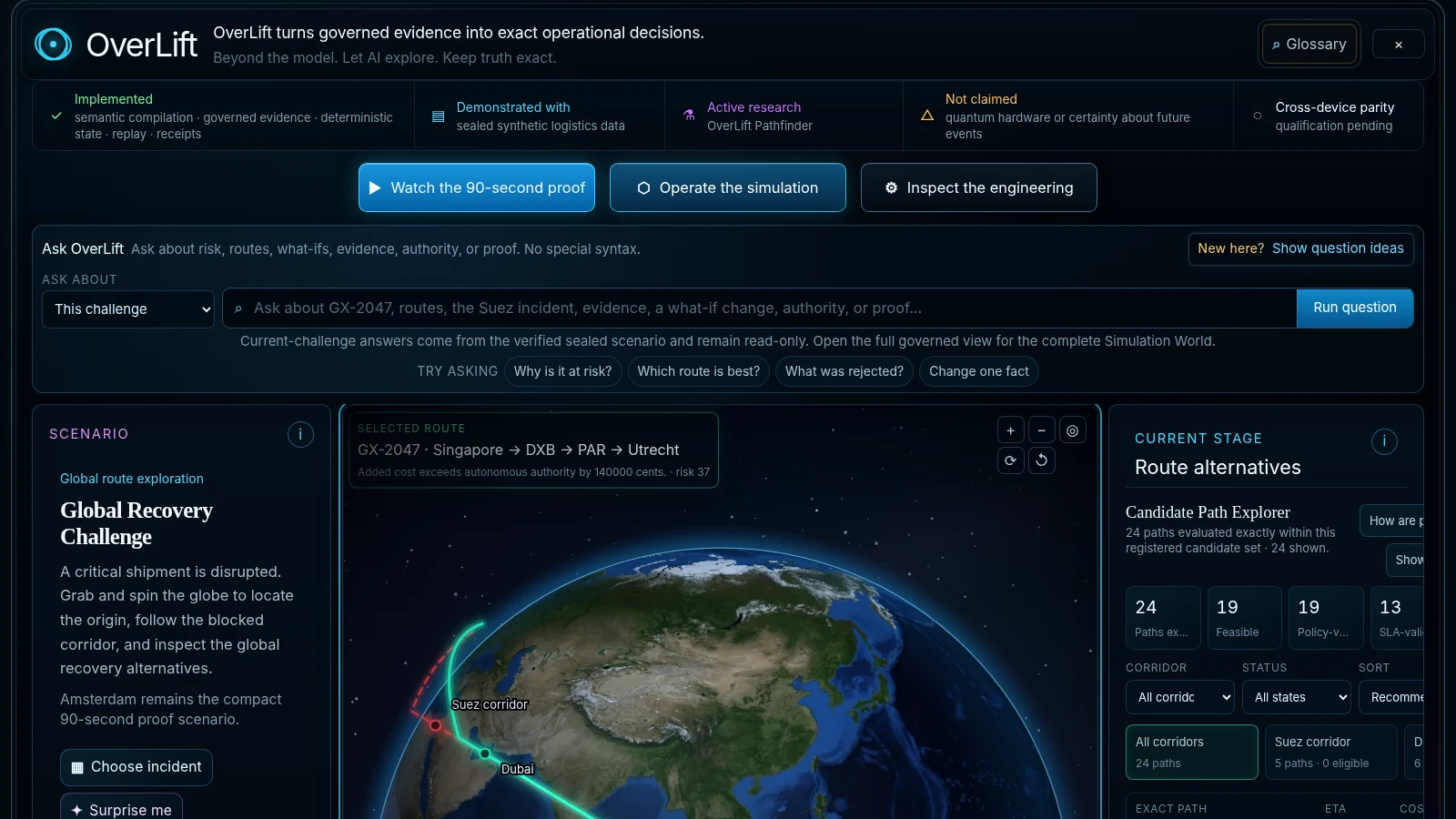
Compare recovery routes when a facility outage puts a shipment at risk. The interactive example shows the evidence, limits, and approvals behind a decision.
Compare a proposed action with the rule that admits or blocks it.
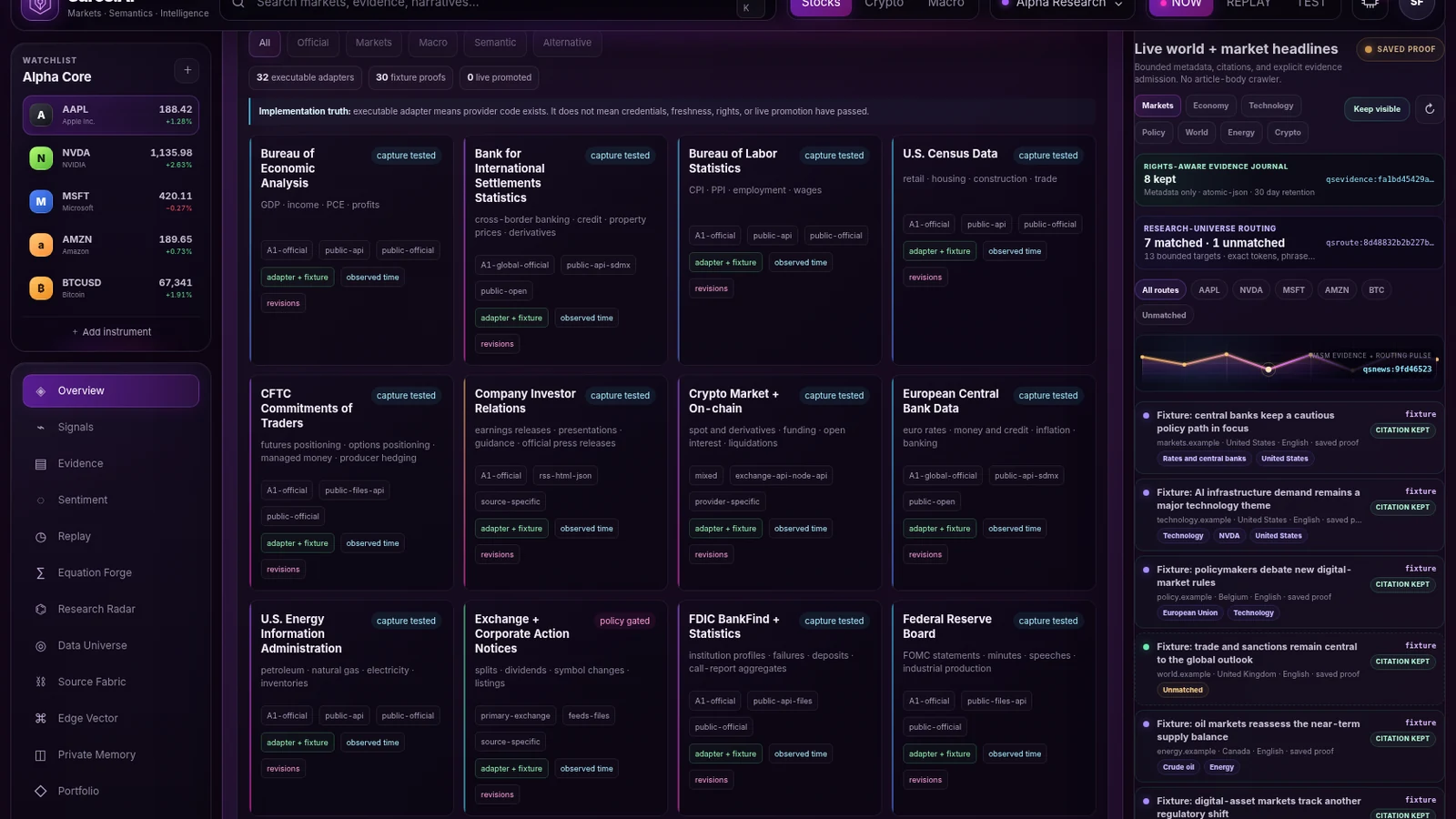
Investigate a market question using the information available at a chosen moment. The case study follows sources, revisions, and calculations through an analysis.
Look for the point in time, source revisions, and assumptions behind an analysis.
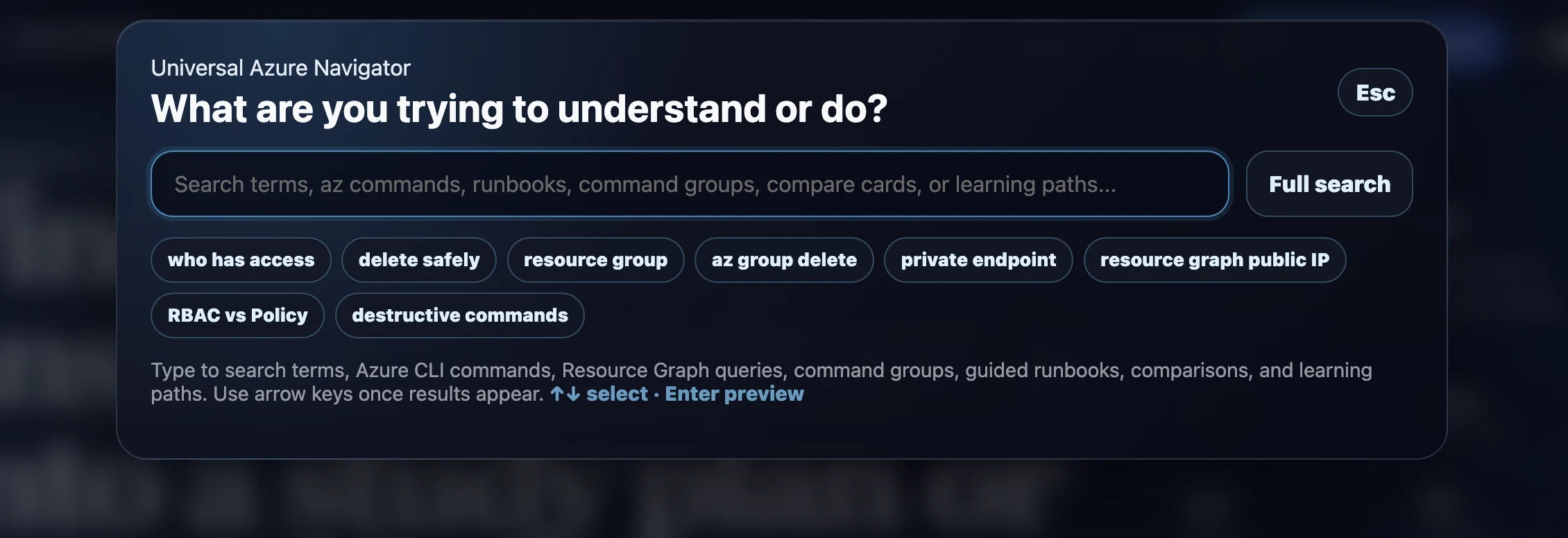
Find Azure concepts, command references, and related study material in one place. The case study follows the connections between a question, its explanation, and the next thing to learn.
Look for how a question leads to a useful concept and a practical next topic.
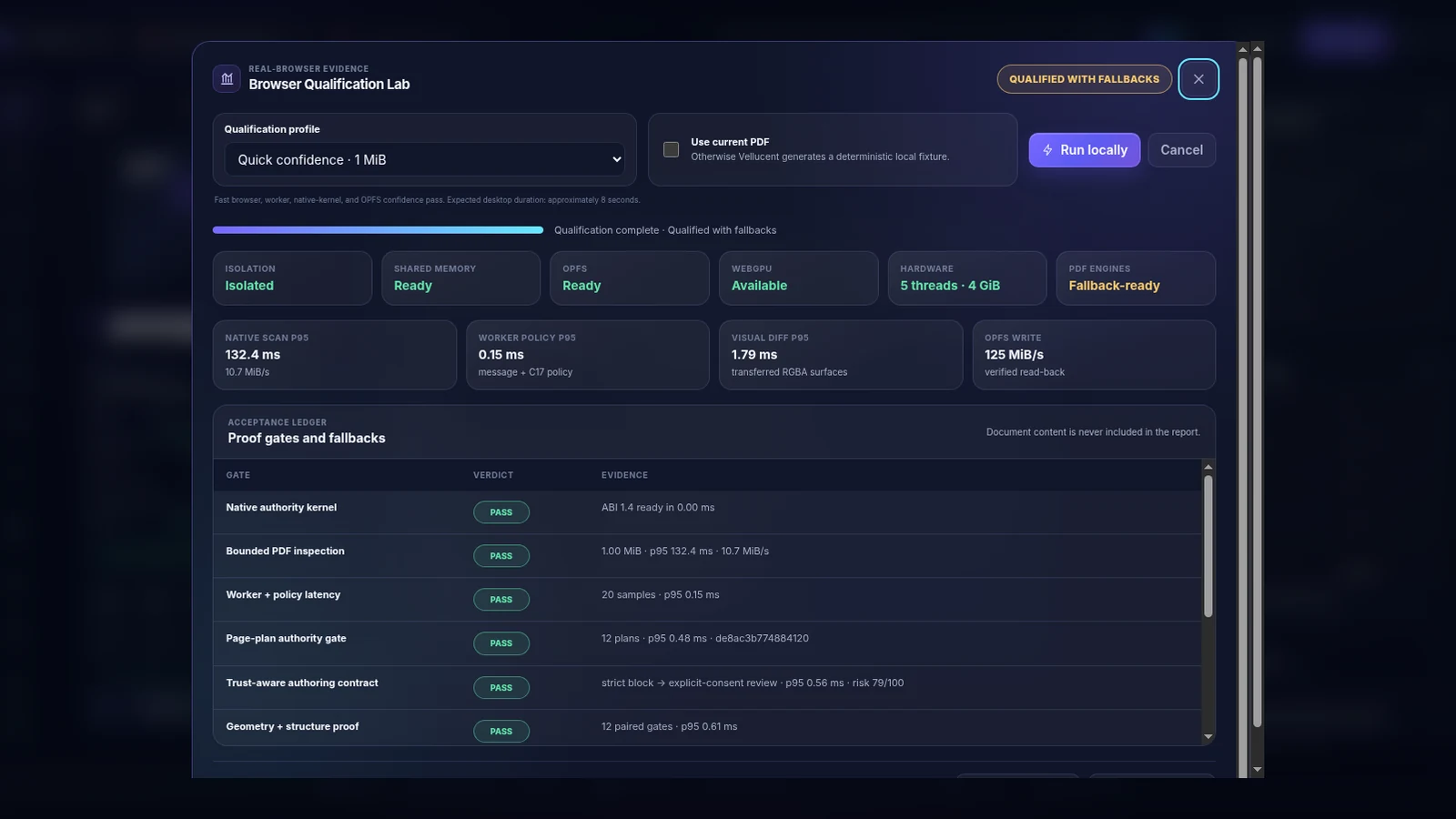
Examine a proposed PDF correction while protecting the author’s facts and intended meaning. The case study follows the edit through checks, human review, and a recorded decision.
Follow what an edit changes, what must remain fixed, and who accepts it.
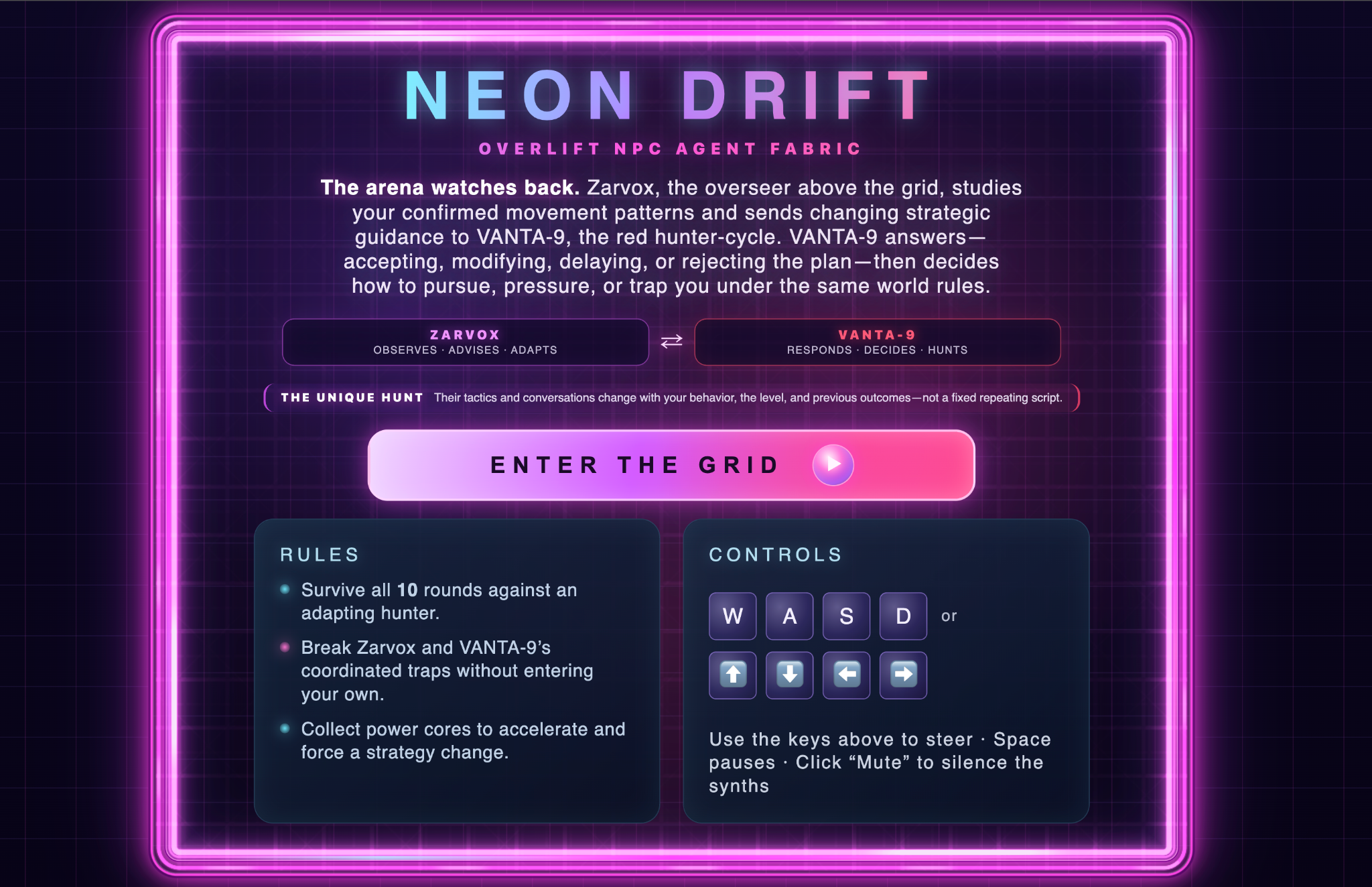
Explore pursuit and commentary through VANTA-9 and Zarvox in a light-cycle arena. The case study follows each agent’s proposals, the game rules, and the recorded outcomes.
Follow an agent’s perception, proposed move, and the game rule that allows it.
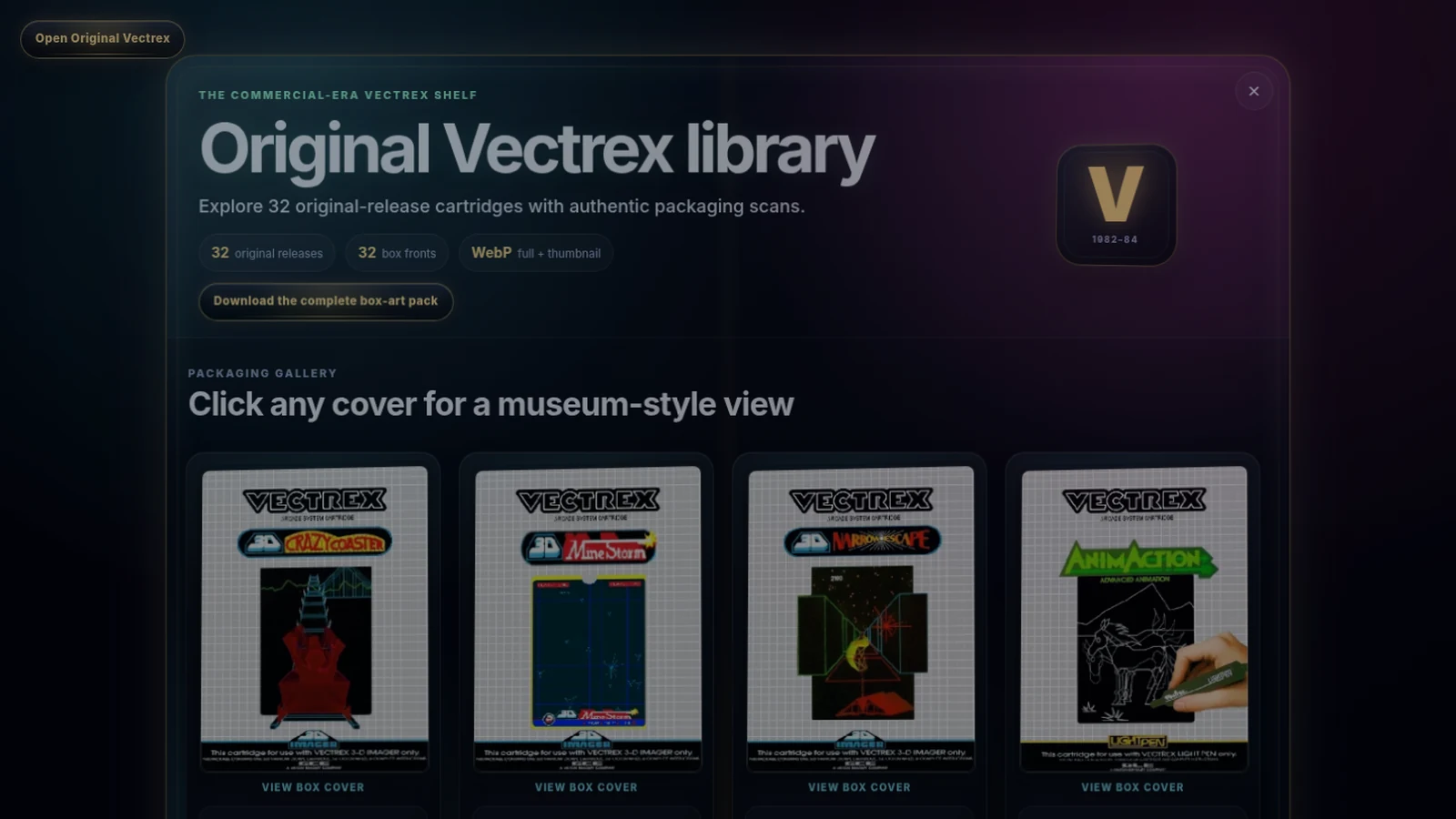
Explore vector emulation with speech-guided controls and private diagnostics. The case study follows a command from clarification to machine state and repeatable checks.
Look for command clarification, machine state, and repeatable diagnostics.
In the synthetic Amsterdam outage example, compare recovery routes for shipment OD-1042 and inspect the service, cost, and approval rules behind the outcome.
Inspect the alternatives, see why a route is accepted or rejected, and replay the decision.
Three starting points for the architecture, tradeoffs, and testing behind these systems.
The hosting split behind the original .NET and Azure application, and what it teaches.
Read the articleTurn a product hypothesis into testable contracts and evidence for release.
Read the articleFollow a shipment from question to evidence, approval, and replay inside the browser.
Read the articleI’m looking for a full-time role where I can bring production engineering experience and practical AI development to a strong team. OverLift is my independent engineering and research work.